Your child isn't being lazy: understanding Developmental Language Disorder

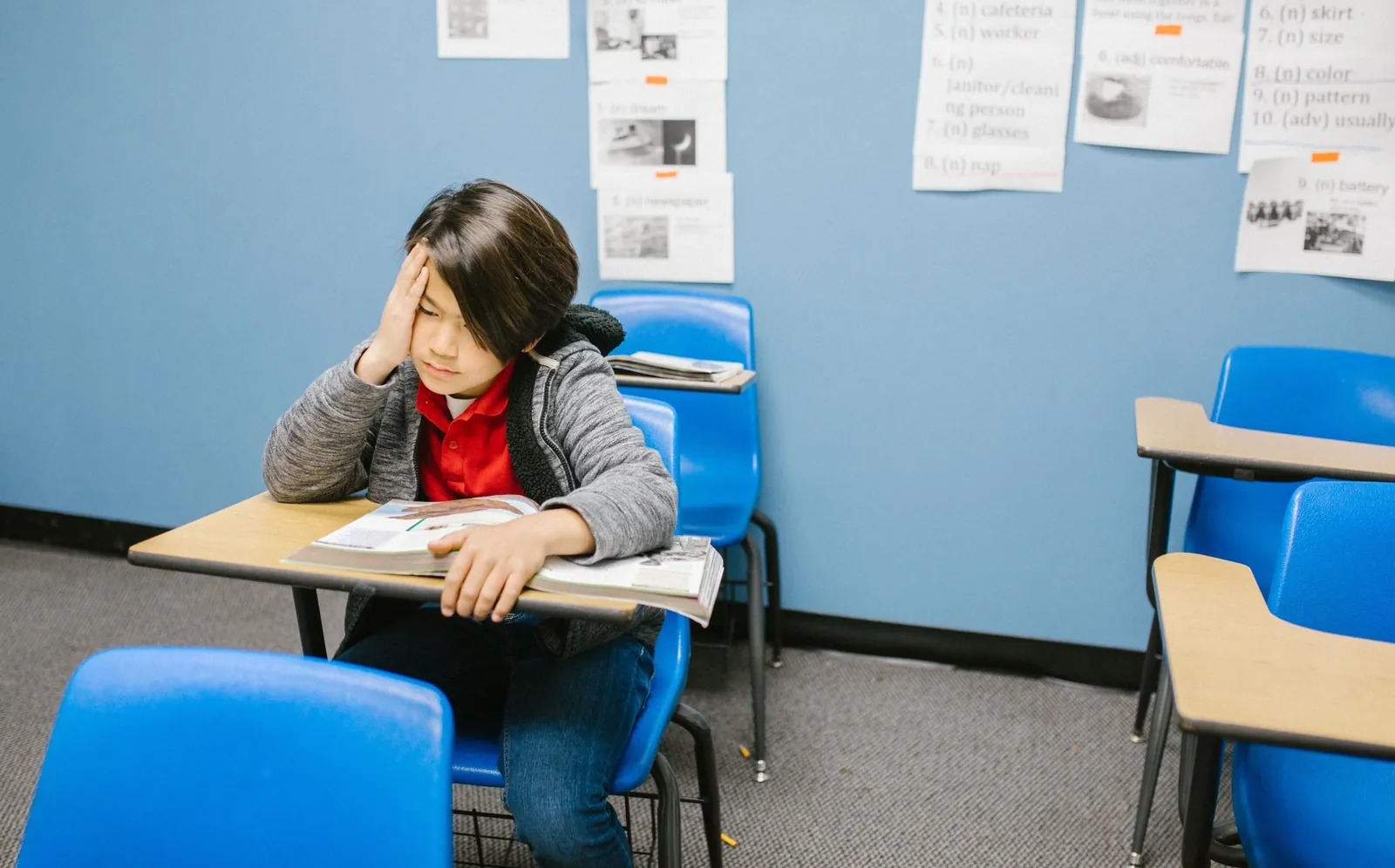
Your child isn't being lazy, rude or difficult: understanding Developmental Language Disorder
There is a particular kind of child who slips through the cracks at school, and it is not the child you might expect.
They are not the one who acts out loudly, or who obviously struggles to speak. They are the one who gives one-word answers and gets labelled shy. The one who doesn't follow the instructions and gets labelled as not listening. The one who goes quiet during reading comprehension and gets quietly dismissed as 'not very academic'. They are often working harder than anyone in the room, and almost nobody can see it.
Many of these children have something called Developmental Language Disorder, or DLD. It is one of the most common learning difficulties there is, and one of the least recognised. If you have never heard of it, you are in very good company, and that is a large part of the problem.
What is DLD?
Developmental Language Disorder is a persistent difficulty with learning, understanding and using language, that is not caused by another condition and is not a reflection of a child's intelligence.
A few things are worth knowing straight away, because they overturn the usual assumptions.
It is common. Research that has tested whole classrooms, rather than only the children someone was already worried about, finds that around 1 in 14 children meets the criteria. That is roughly two children in every Australian classroom, and it is the figure Australian organisations such as Language Disorder Australia and The DLD Project use. It sits alongside ADHD as one of the most common developmental differences of childhood.
It is mostly undiagnosed. Because the signs are quiet and easily mistaken for something else, most children with DLD are never identified. In those whole-classroom studies, neither the parents nor the teachers had raised concerns about the language of most of the children who turned out to qualify.
It is lifelong. DLD is not something a child simply grows out of, though it looks different as they get older. Many of these children were late talkers who did not catch up. Good support teaches real, usable skills, but it does not change the way the brain learns language.
It affects more than talking. Because so much of school runs on language, DLD reaches into reading and writing too. Difficulty understanding and using spoken language becomes difficulty understanding what is read, and difficulty getting thoughts down on the page.
It is not about intelligence, effort or upbringing. A child can be bright, curious, hard-working and well-supported at home, and still have DLD.
It can also sit alongside other things, such as ADHD or difficulties with speech sounds, though it is its own distinct thing. In fact the children who have DLD and nothing else are precisely the ones most likely to fly under the radar, because there is no louder, more obvious difficulty to trigger a closer look.
Why it gets missed, and misread
When a child cannot do something because of a language difficulty you cannot see, the adults around them tend to reach for an explanation they can see. The explanations they reach for are rarely kind.
The child who doesn't follow the instruction looks like they weren't paying attention, or won't cooperate. The child who answers in short, blunt phrases looks rude, or difficult, or like they simply don't want to engage. The child who struggles with reading comprehension looks like they aren't very bright. None of these is true. Underneath, there is often a child who is paying attention, who is trying their absolute best, and who just did not fully understand the language that came at them.
That gap, between how hard the child is working and how they are being read, is where the real damage happens. Not in the language difficulty itself, but in years of being quietly misjudged for it.
The two things that are actually hard
DLD mostly comes down to difficulty in two areas. They sound technical, but they show up in very ordinary moments.
1. Understanding and building sentences (grammar).
This is difficulty with the rules that hold language together: the small changes that signal meaning (the difference between "walking" and "walked"), and word order (the difference between "the man bit the dog" and "the dog bit the man"). It is not about using big words. It is about the structure underneath.
A few real examples bring it to life:
A teacher says to a class sitting on the floor, "Don't stand up right now." A child with DLD stands up. They caught "stand up," but the "don't" slipped past.
A teacher says, "Go and get your lunch card, unless you brought lunch from home." A child who brought lunch from home joins the queue for a card anyway, and is upset when they're told to put it back. The "unless" was the hinge the whole sentence turned on, and it was the part that was lost.
A ten-year-old reads, "The land to the west of the Appalachian Mountains was divided into two territories," and asks, in genuine confusion, "Why were the mountains divided in half?"
In each case the child was trying. The longer and more complex the sentence, the more likely the thread is to be lost, and the more the child has to lean on guesswork and context to fill the gaps. At home this can look like not following multi-step instructions, giving answers that don't quite match the question, or telling a story that comes out either as one or two bare words or a long tangle that is hard to follow.
2. Learning and remembering words (vocabulary).
Children with DLD find it genuinely harder to pick up and hold onto new words. The sticking point, interestingly, is right at the start: forming that first impression of what a new word sounds like and means. Once a word is in, they tend to hold it about as well as anyone. But new words slip past before they take root, a bit like hearing an unfamiliar word in a language you are still learning, registering that it was new, and then having no idea what it was an hour later.
There is a flip side many parents will recognise too, called word-finding difficulty. The child knows a word, but cannot pull it up in the moment they need it. So they stall, or say "the thing, you know, the thing," or talk all the way around it ("the animal, it's fluffy, it goes on the farm") without landing on "chicken." It can look like forgetfulness or vagueness. It is neither. The word is in there. The filing system is just slower to hand it over.
This matters enormously at school, because so much of learning is, underneath, word learning. And there is a striking figure worth knowing: a typically developing child might need to meet a new word around ten times to learn it. A child with DLD may need more than thirty. They are not failing to learn. They simply need far more encounters than the classroom usually offers.
The part that often hurts most
The academic impact is real, but the social and emotional side is just as big, and it tends to grow as children get older and their friends' language gets faster and more complex.
Friendships run on communication, and when you cannot quite keep up with the conversation, a lot can happen. Children with DLD may become more shy and withdrawn over time. They may copy what the other children are doing because they are not sure what else to do. They can come across as blunt or rude, because the polite version of a sentence is usually the longer, more complex one ("when you get a chance, would you mind passing the butter?") while the simple version can sound sharp ("I want butter"). Some deflect by being the disruptive one, or the clown, or by being extra agreeable. And because so much goes over their head, they can be more vulnerable to peer pressure and to being taken advantage of.
Underneath a lot of this is plain exhaustion. School asks for language almost constantly, and when language is the thing you find hardest, meeting those demands all day, every day, is draining in a way that is easy to miss. Many people with DLD describe feeling tired, inadequate and misunderstood. Not because they lack ability or effort, but because they are swimming against a current no one else can see.
What actually helps
These difficulties respond to the right support, and a lot of what helps costs nothing but a shift in understanding. Some of it you can do at home, and some of it is worth gently asking your child's school to try.
To help them understand:
Keep instructions shorter and simpler, and break them into steps rather than delivering them all at once.
Use more than words. Pictures, gestures, pointing, demonstrating and diagrams all give the message another way in.
Build in processing time. A pause after you say something is not a child being slow, it is a child doing the work. Resist filling the silence.
To help them express themselves:
Offer sentence starters to get them going.
Let them show what they know in other ways sometimes, by drawing, building or doing, not only by talking or writing.
To help them learn words:
Make sure they can actually say a new word, close to correctly, before expecting them to learn it. The sound comes first.
Repeat, far more than feels necessary, across different days and situations.
Go for depth, not just definitions. Exploring what a word means, what group it belongs to, what it looks like, what it does and what goes with it (a tool speech pathologists call semantic feature analysis) helps words stick and helps children describe things when the exact word won't come.
To protect their confidence:
Create low-pressure chances to talk and read, in pairs or small groups rather than in front of the whole class, where a mistake feels less exposing.
Hold a simple line, warmly and consistently: it is okay to make mistakes, it is not okay to make fun of anyone for them.
What you can ask your child's school for
Many parents don't realise that your child does not need a formal diagnosis of DLD for their school to start helping.
Every school in Australia, government, Catholic and independent, takes part in the Nationally Consistent Collection of Data on School Students with Disability, usually shortened to the NCCD. Under it, schools identify students who need adjustments because of a disability, and DLD counts. Crucially, adjustments can be made on the basis of the school's own evidence and professional judgement about what a child needs, not only on a formal diagnosis. So you can raise a concern and ask for support to begin now, while any assessment is still underway.
More than that, support at school is a right, not a favour. Under the Disability Discrimination Act and the Disability Standards for Education, Australian schools are required to make reasonable adjustments so that a student with disability, including a language disorder, can take part in education on the same basis as their peers. DLD qualifies. You are not asking for charity when you ask for this. You are asking for something your child is entitled to.
Practically, that can look like:
A meeting with the classroom teacher and, where the school has one, the learning support or wellbeing coordinator, to talk through what you are noticing.
The adjustments above (shorter instructions, visual supports, processing time, low-pressure speaking) written into a simple individual learning plan, so they follow your child from term to term and teacher to teacher rather than restarting every year.
A referral to the school speech pathologist if the school has access to one. Many do not have enough speech pathology time to go around, which is one of the honest gaps in the system, and is often why families seek a private or community assessment as well.
When you go in, you do not need the perfect words or a diagnosis in hand. "I think my child might be finding language harder than it looks, and I would like us to work out how to help" is more than enough to start the conversation.
If your child is at a Victorian government school
Victoria does this its own way, and it helps to know the names of things so you can ask for them directly.
Victorian government schools now use a model called Disability Inclusion, which has replaced the older Program for Students with Disabilities. The change matters for DLD in particular, because the new model is built around a child's functional needs, meaning what they actually find hard day to day, rather than around a diagnostic label. That suits a hidden, often undiagnosed difficulty like DLD far better than the old system did.
The practical entry points:
You can ask the school to hold a Student Support Group meeting, a formal get-together of you, the school, and your child where appropriate, to plan and regularly review your child's support. You can request one as a parent. You do not have to wait to be invited.
For children with more complex needs, the school can carry out a Disability Inclusion Profile, a structured process done with your consent that looks at your child's strengths and functional needs, feeds into their learning plan, and can unlock individual (Tier 3) funding. Not every child will need or qualify for that top tier, and that is completely okay, because of the next point.
Schools must make reasonable adjustments regardless of whether any extra funding is attached. Everyday classroom support does not depend on a profile or a funding tier. It is simply expected.
If your child is at a Catholic or independent school in Victoria, the names will differ, but the principle holds: each sector has its own inclusion and funding processes, and all of them are bound by the same national duty to make reasonable adjustments.
Where to get help in Australia
In Australia, the professional who assesses and diagnoses DLD is a speech pathologist. You do not need a doctor's referral to see one privately, though your GP can also help: a chronic condition management plan through your GP can provide a small number of Medicare-rebated speech pathology sessions each year, and many families use community health or hospital services as well. Waitlists in the public and school systems can be long, which is worth knowing as you plan.
A few trusted Australian organisations are genuinely worth your time if you want to understand DLD better or advocate for your child:
Language Disorder Australia (languagedisorder.org.au), Australia's established network for children and young people with language disorder.
The DLD Project (thedldproject.com), an Australian social enterprise with excellent, plain-language resources for families, including guides on finding the right speech pathologist and advocating at school.
DLD also has its own awareness campaign, run globally by RADLD and marked each October, which is slowly lifting this hidden disability into the light where it belongs.
And this is where a speech pathologist genuinely changes things. DLD is often invisible to everyone until someone who knows what to look for actually looks. A speech pathologist can identify whether language is the thing your child is quietly struggling with, teach the specific skills that help, and, just as importantly, help the adults around your child swap frustration for understanding. That shift, from "why won't this child cooperate" to "this child is working so hard and needs a different way in," is frequently the thing that changes a child's whole experience of school.
What I would like you to take away
If any of this has made you think of a particular child, sit with that, gently. Not with alarm, but with a kind of relief, because a difficulty you can name is a difficulty you can help with, and a child who has been misread can be seen properly again.
Your child is not lazy. They are not rude. They are not difficult, or slow, or not trying. They may simply be working harder than anyone realises, against something no one has named yet. Naming it is not a label that limits them. It is the thing that finally lets the right help arrive.
If you would like someone to help you work out whether language is part of your child's story, you are welcome to reach out to us. We are a neurodivergent-led team, we come to you, and we start by assuming your child is already doing their best with what they have.
About this article
This piece is adapted for Australian parents from "Developmental Language Disorder (DLD) in the Classroom," an evidence-based professional resource created by The Informed SLP for educators. The Informed SLP summarises peer-reviewed speech pathology research for clinicians, and the original presentation is fully referenced. Australian context, school rights and local resources draw on Language Disorder Australia (languagedisorder.org.au) and The DLD Project (thedldproject.com). Statistics and strategies described here reflect those sources and the research they draw on.